


Brazil – Cerrado Regional
Brazil’s Cerrado region, located in Minas Gerais, is one of the country’s most important coffee-producing areas, known for its consistency, scale, and ideal growing conditions. With well-defined seasons—hot, wet summers followed by dry winters—the region allows for controlled harvesting and uniform drying.
Cerrado Fine Cup 17/18 refers to a high-grade Arabica coffee. “Fine Cup” indicates a clean, defect-free profile, while “17/18” represents the larger screen size of the beans, ensuring even roasting and consistency in every batch.
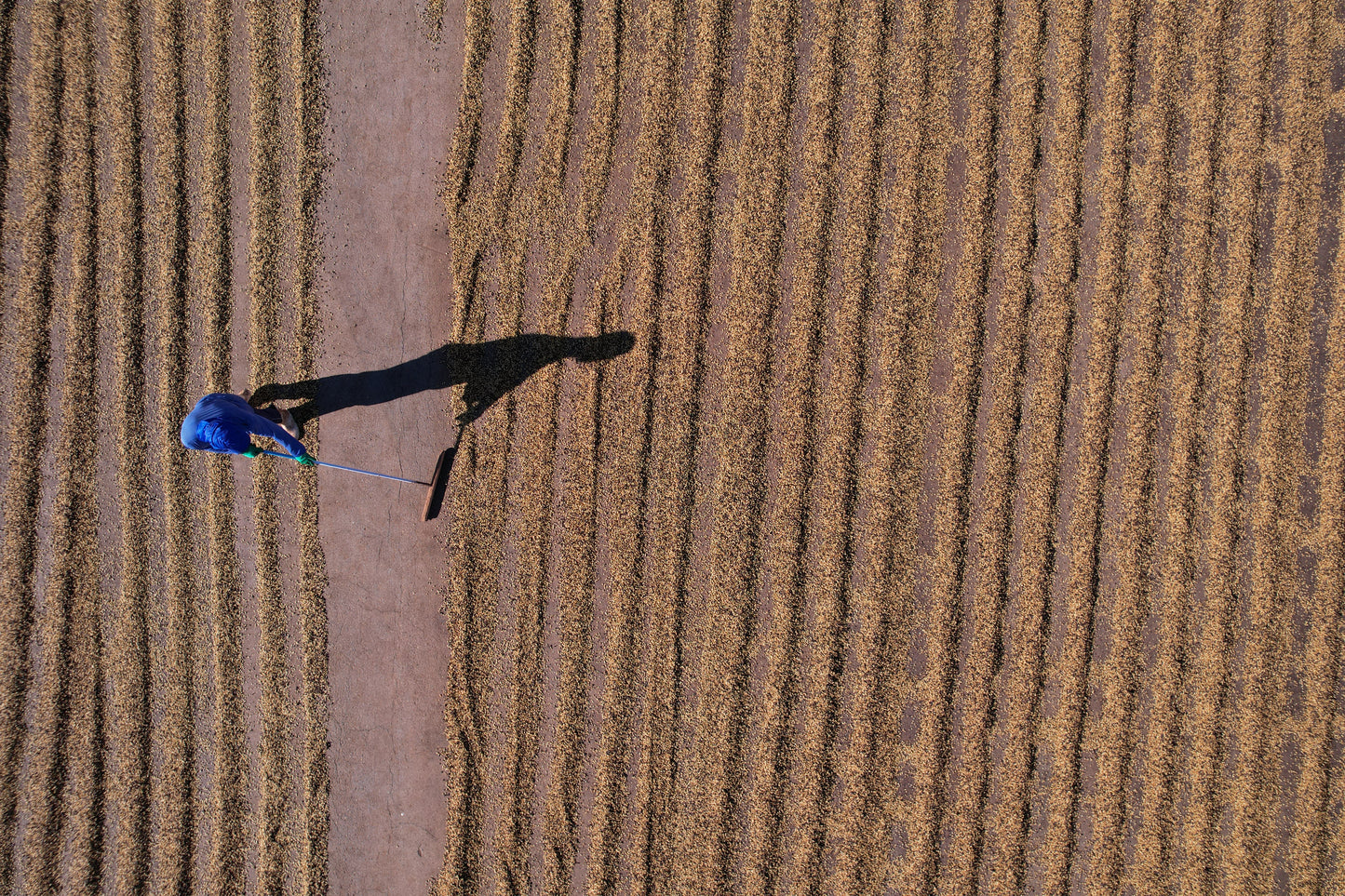
This coffee is processed using the natural (dry) method, where the beans are dried inside the whole coffee cherry. After harvesting, ripe cherries are carefully sorted and then spread out on patios or raised beds to dry under the sun. They are regularly turned to ensure even drying and prevent over-fermentation. As the fruit slowly dries, sugars from the pulp infuse into the beans, enhancing sweetness and body.
Once dried to the optimal moisture level, the cherries are rested before being hulled to remove the dried outer layers. The green coffee is then graded and prepared for export.
Brazil’s Cerrado region, located in Minas Gerais, is one of the country’s most important coffee-producing areas, known for its consistency, scale, and ideal growing conditions. With well-defined seasons—hot, wet summers followed by dry winters—the region allows for controlled harvesting and uniform drying.
Cerrado Fine Cup 17/18 refers to a high-grade Arabica coffee. “Fine Cup” indicates a clean, defect-free profile, while “17/18” represents the larger screen size of the beans, ensuring even roasting and consistency in every batch.
This coffee is processed using the natural (dry) method, where the beans are dried inside the whole coffee cherry. After harvesting, ripe cherries are carefully sorted and then spread out on patios or raised beds to dry under the sun. They are regularly turned to ensure even drying and prevent over-fermentation. As the fruit slowly dries, sugars from the pulp infuse into the beans, enhancing sweetness and body.
Once dried to the optimal moisture level, the cherries are rested before being hulled to remove the dried outer layers. The green coffee is then graded and prepared for export.