


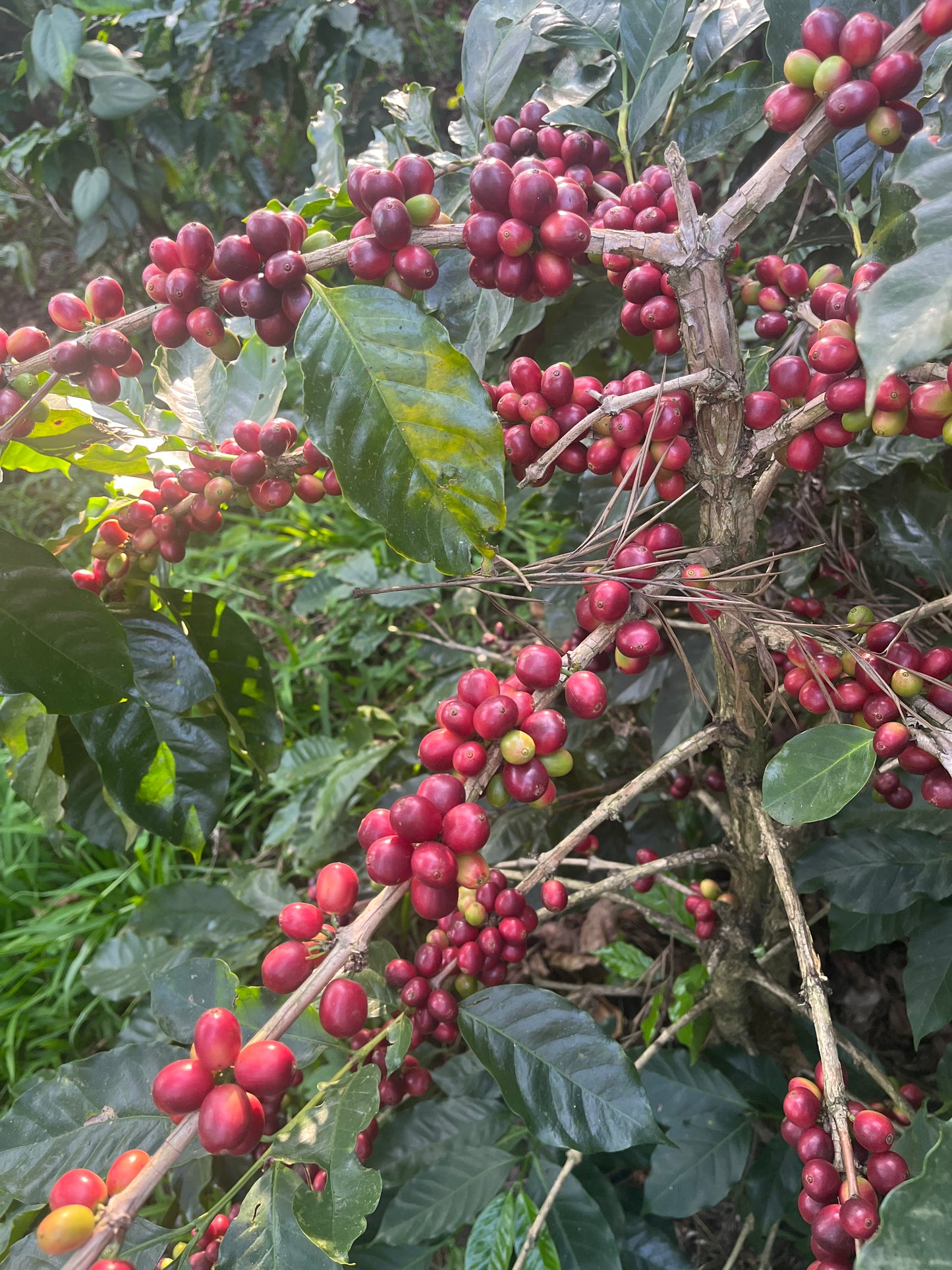
India - Robusta Cherry
There are approximately 250,000 coffee farmers in India, nearly 90% of whom are smallholders. Around 80% of the country’s coffee production is exported, with key destinations including Germany, Russia, Italy, Spain, Belgium, the United States, and France.
Coffee is traditionally cultivated in three main regions-Karnataka, Kerala, and Tamil Nadu-with Karnataka being the largest and most significant producer. The history of coffee in India dates back to the legend of Baba Budan, who is said to have brought seven coffee seeds from Yemen and planted them in the hills of Karnataka. From there, coffee cultivation expanded, particularly during the 19th century under British influence.
All coffee in India is grown under shade, often intercropped with spices such as cardamom, pepper, cloves, and nutmeg. This unique growing environment contributes to the coffee’s distinctive character. Coffee plants bloom for just a few days each year, producing delicate white flowers, and the cherries are harvested approximately nine months later, typically between January and March. Robusta Cherry is processed using the traditional natural (dry) method, where the coffee beans are dried inside the whole fruit. After harvesting, ripe cherries are sorted and cleaned to remove any under ripe or defective fruit before drying begins.
The cherries are then spread out on patios or raised beds and left to dry under the sun for several days or weeks. During this time, they are regularly turned to ensure even drying and to prevent unwanted fermentation. As the fruit slowly dries, the sugars and compounds from the pulp interact with the beans, contributing to a heavier body and deeper, more robust flavor profile.
Once the cherries reach the optimal moisture level, they are rested briefly before being hulled to remove the dried outer layers. The green coffee is then sorted and graded to ensure consistency and quality before being prepared for export.
