


About
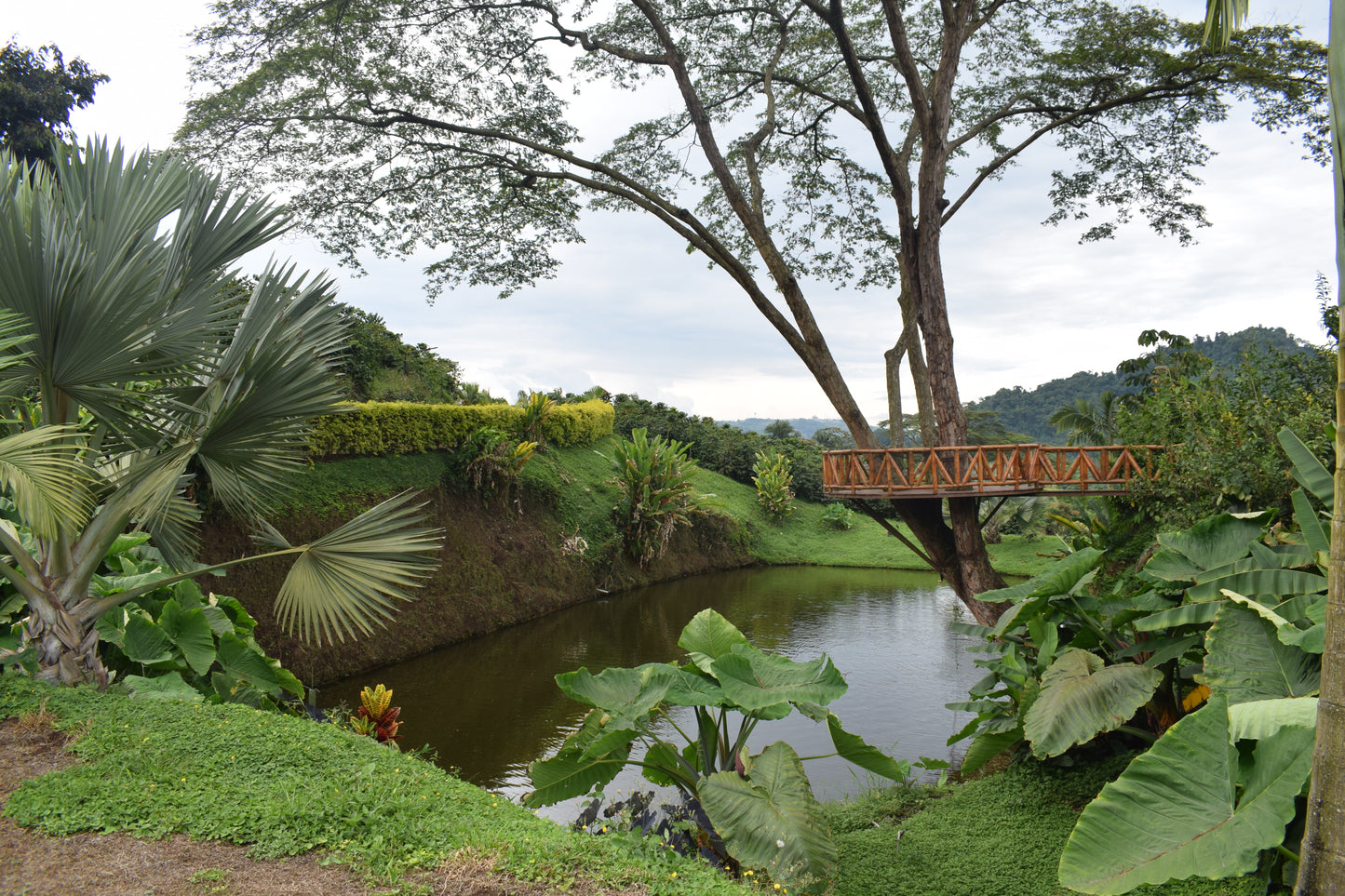
Located in the Chinchiná Caldas region of Colombia, El Renacer is a 30-hectare farm situated at elevations ranging from 1,410 to 1,800 meters above sea level. This altitude provides ideal conditions for growing high-quality Arabica, with cooler temperatures and slower cherry maturation contributing to greater complexity in the cup. El Renacer grows a diverse range of cultivars, including Pink Bourbon, Geisha, SL28, Papayo, Red Bourbon, Castillo, and Caturra. This variety, combined with the farm’s elevation range, allows for a wide spectrum of sensory profiles—ranging from delicate and floral to juicy, fruit-driven expressions.
|
|
 |
 |

History
Nearly four decades ago, Elmer Restrepo began his journey in the coffee industry through work in dry milling—handling hulling, grading, and drying. His early experience gave him a strong foundation in the technical side of post-harvest coffee processing, and over time, he expanded into exporting his own coffees as well as those of neighboring producers in Chinchiná, Caldas. Now in his 60s, Elmer has become a significant figure across the coffee value chain. His practical knowledge and long-term vision led to the founding of his own farm: El Renacer. What began as a traditional coffee operation has steadily transformed into a forward-thinking, innovation-driven project. Today, El Renacer is known for its precise, quality-focused processes and a strong commitment to continuous improvement—a reflection of Elmer’s deep understanding of coffee and his dedication to raising standards at every stage.
The Process
Harvesting begins with strict selection to ensure only fully ripe cherries are picked. These cherries then undergo a 24-hour oxidation phase in food grade plastic containers, allowing for controlled exposure to oxygen that initiates flavor development. Following oxidation, the coffee is transferred to sealed tanks for anaerobic fermentation lasting 36 hours. This stage is carefully managed with temperatures maintained below 25°C and the addition of a selected yeast strain to guide the fermentation process and enhance the cup profile. Once fermentation is complete, the coffee is washed using water cooled to 5°C. This cold wash halts the microbial activity and stabilizes the coffee, preserving the desired characteristics developed during fermentation. The final step is drying, where the coffee is placed on raised African beds to dry slowly and evenly, ensuring consistency and quality in the final product