


About
Kiamabara Washing Station is located in the town of Kabare, within the Gichugu division of Nyeri County, near Karatina. The station supports approximately 3,000 active smallholder members, each cultivating around half a hectare of land dedicated to coffee, alongside crops such as macadamia, beans, bananas, and maize. Situated at an altitude of approximately 1,900 meters above sea level, Kiamabara benefits from deep, fertile red volcanic soils and a temperate climate, with consistent temperatures ranging from 13°C to 24°C. The region receives an average annual rainfall of 1,150 mm, with long rains occurring from March to May and short rains between October and December.
|
|
 |
 |

The Process
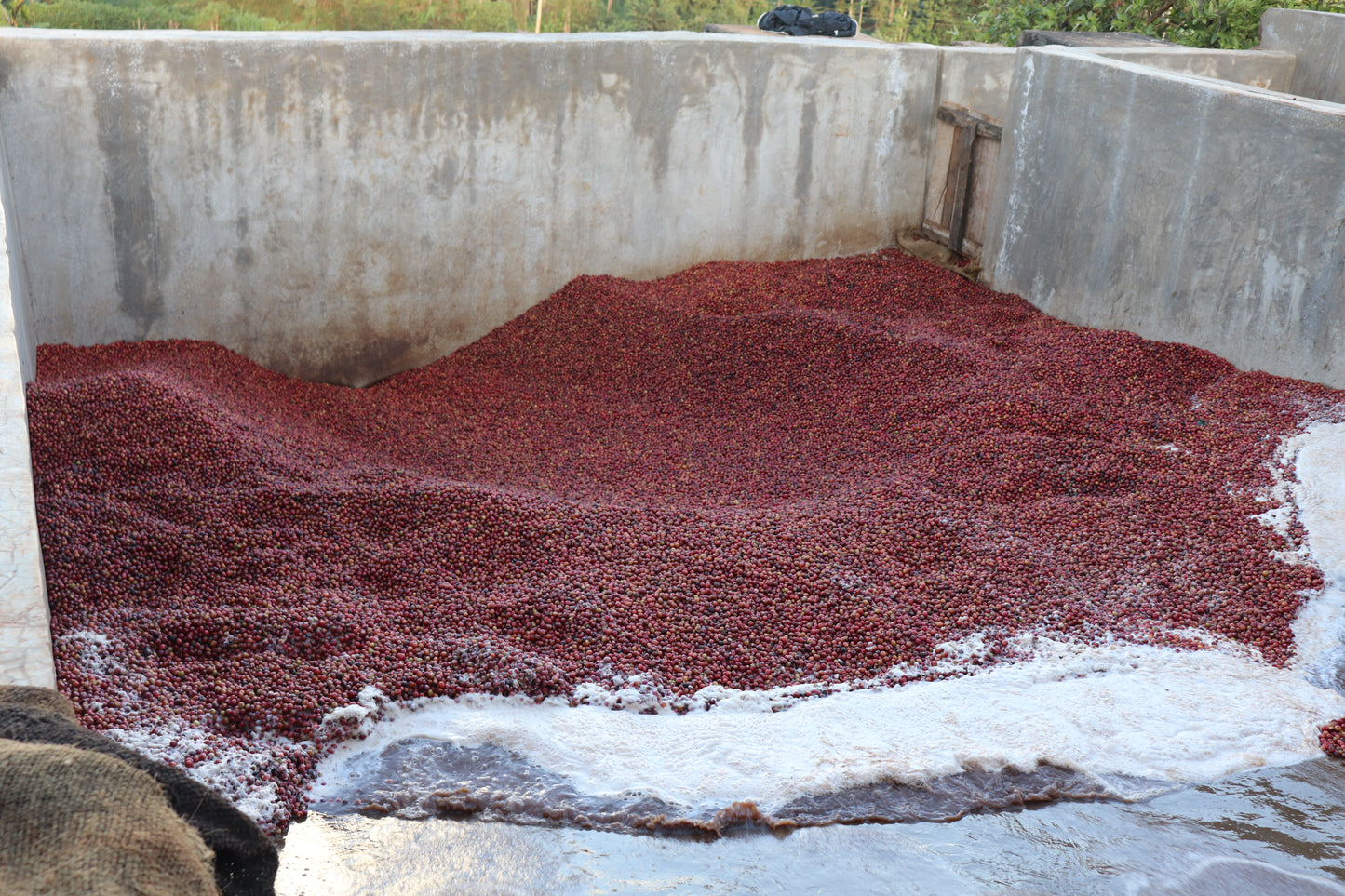
Once the coffee cherries are harvested, they are delivered to the Kiamabara Washing Station, where they undergo a traditional washed (wet) processing method. Water is pumped into reservoir tanks and used for pulping, where the outer skin and pulp are removed. Once pulped, the coffee is fermented overnight to break down the mucilage, then washed and soaked. It is then moved to raised drying beds, where it’s turned regularly for uniform drying and airflow. This controlled drying process takes place under careful supervision to maintain quality and consistency. Once the parchment reaches target moisture levels, it’s sorted and stored before moving to the dry mill for hulling and export preparation