


About
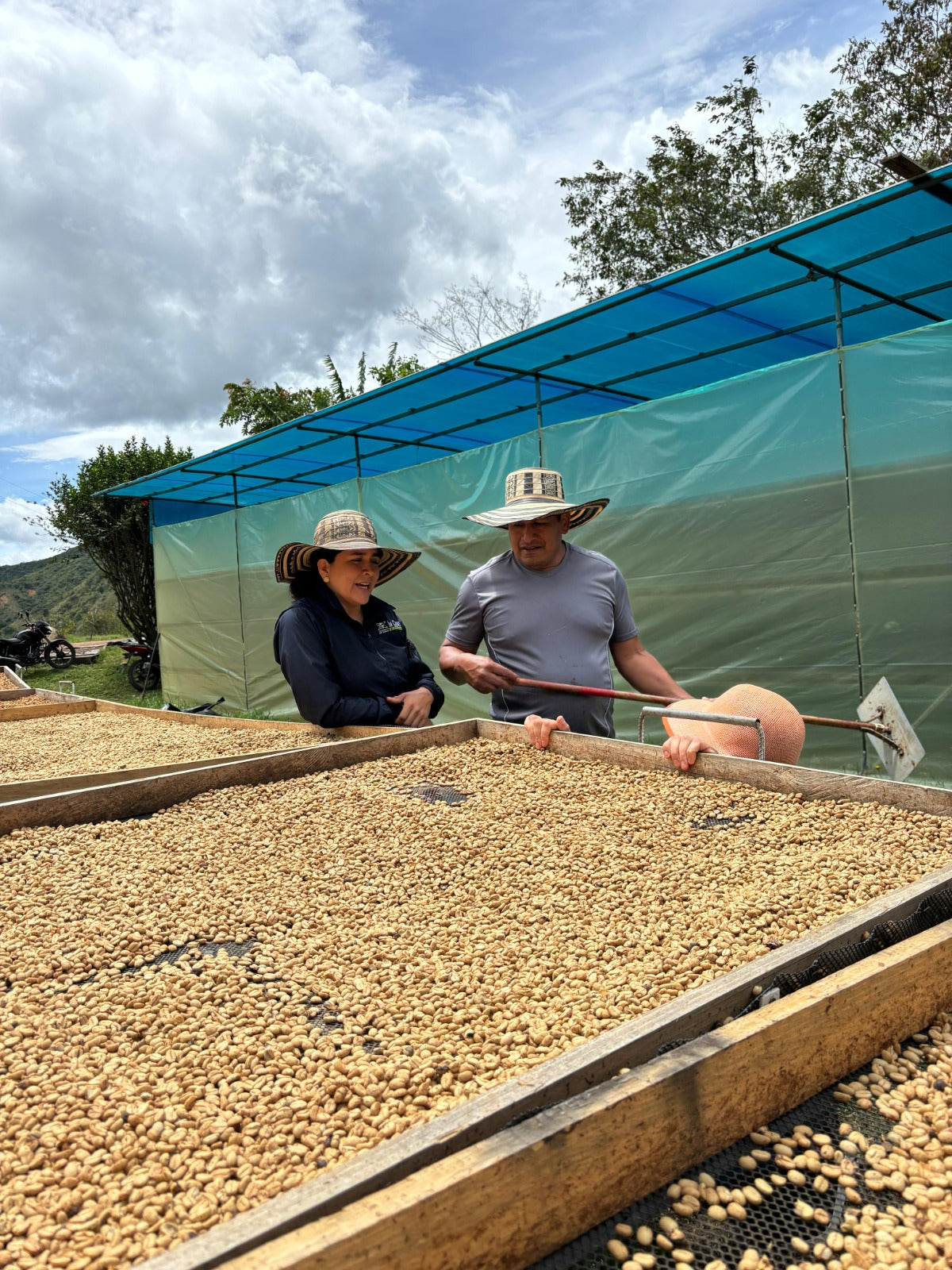
In a region once thought unfit for coffee, Finca San Antonio has been proving otherwise since 2003. Lida and her husband began with Caturra and Colombia varietals, later adding Castillo for its resilience and yield. They’ve steadily improved the farm’s infrastructure—wet mills, water treatment systems, and parabolic dryers—to support their careful, quality-first process: selective harvesting, flotation, fermentation, and weather-dependent drying. Lida’s work goes beyond the farm. She’s committed to innovation, sustainability, and community, supporting neighboring producers and partnering with programs to help elevate the region’s coffee.
|
|

|
 |

The Process
At Finca San Antonio, the anaerobic washed process starts with harvesting only fully-ripe cherries to ensure peak sweetness and quality. Once collected, the cherries go through flotation to remove unripe, dry, or damaged fruit. A second round of hand-sorting eliminates any green or semi ripe cherries. The selected fruit is then disinfected and depulped, separating the beans from the skin. The beans are transferred to sealed tanks filled with clean water—no additives— for anaerobic fermentation which lasts around 72 hours. During this time, key variables like Brix level, pH, and temperature are monitored to guide the fermentation until the mucilage is fully broken down and the beans release a pleasant, clean aroma. After fermentation, the beans are gently rinsed, drained, and then moved to parabolic dryers, where they are dried slowly until they reach a stable moisture content of 10–11%. The result is a clean, expressive coffee that reflects both the care in processing and the unique character of San Antonio’s terroir.