


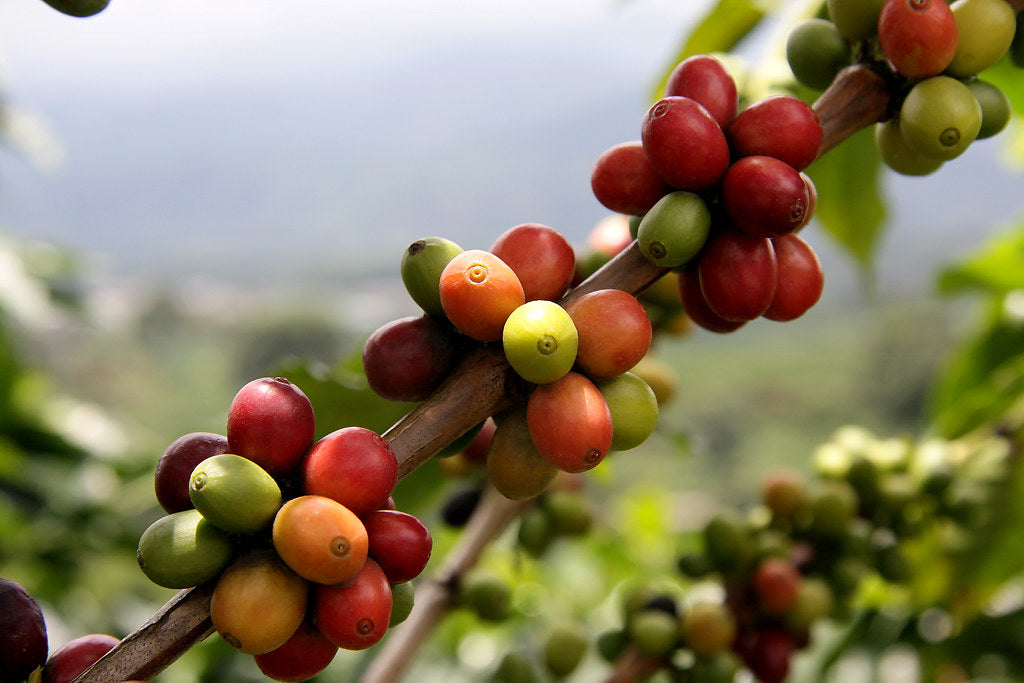
Huila is a department in southwestern Colombia, situated within the Andean region. It shares borders with Tolima and Cundinamarca to the north, Meta to the east, Caquetá to the south, and Cauca to the west. Covering an area of approximately 19,890 square
kilometers, it accounts for around 1.74% of Colombia’s total landmass.
|
|
 |
 |

The region’s landscape is shaped by a combination of mountain ranges and valley plains, formed over time through volcanic activity, erosion, and glacial processes. These natural features contribute to the diverse microclimates and fertile soils that make Huila
one of the country’s most prominent coffee-producing areas.
The process -
Huila Decaf is crafted using a natural decaffeination method designed to preserve the coffee’s integrity, flavor, and aroma. The process begins with the careful selection of high quality Arabica beans. These beans undergo the Sugarcane EA method, which uses only two elements: fresh high-mountain spring water and Ethyl Acetate (EA) derived naturally from sugarcane.
Ethyl Acetate is a compound that naturally exists in coffee cherries as well as in various fruits and vegetables. In this process, it is extracted from fermented sugarcane, making it a natural and non-synthetic option for decaffeination.
To begin, the green coffee is steamed to remove the silver skin. The beans are then moistened to open their cellular structure, allowing for effective caffeine extraction. EA is introduced at this stage to selectively bind with the caffeine molecules and remove them from the beans. The use of gentle temperature and pressure ensures that the coffee’s natural structure and flavor characteristics remain intact. Once the caffeine is removed, the beans are steamed again to eliminate any remaining EA. They are then dried to the ideal moisture content and coated with a natural vegetable-based wax to protect their appearance and maintain quality through storage and transport. This method allows for a clean, chemical-free decaffeination that retains the clarity, aroma, and complexity of the original coffee.