


About
San Pedro Tutule is a municipality of the Department of La Paz, located in the renowned Montecillos coffee region of Honduras. Farms here lie at elevations between 1,400 and 1,600 meters above sea level, with temperatures ranging from 12°C to 28°C. This combination of altitude and climate allows for slow, even cherry ripening, which contributes to more complex and sweeter cup profiles.
The area is home to highly productive farms where producers focus on climate-resilient, pest- and disease resistant coffee varieties. Sustainable and environmentally conscious practices are widely adopted, reflecting a commitment to both quality and long-term ecological balance.
 |
 |
|
The Process
The semi washed process begins with the careful hand picking of ripe coffee cherries, ensuring only mature, high quality fruit is selected.
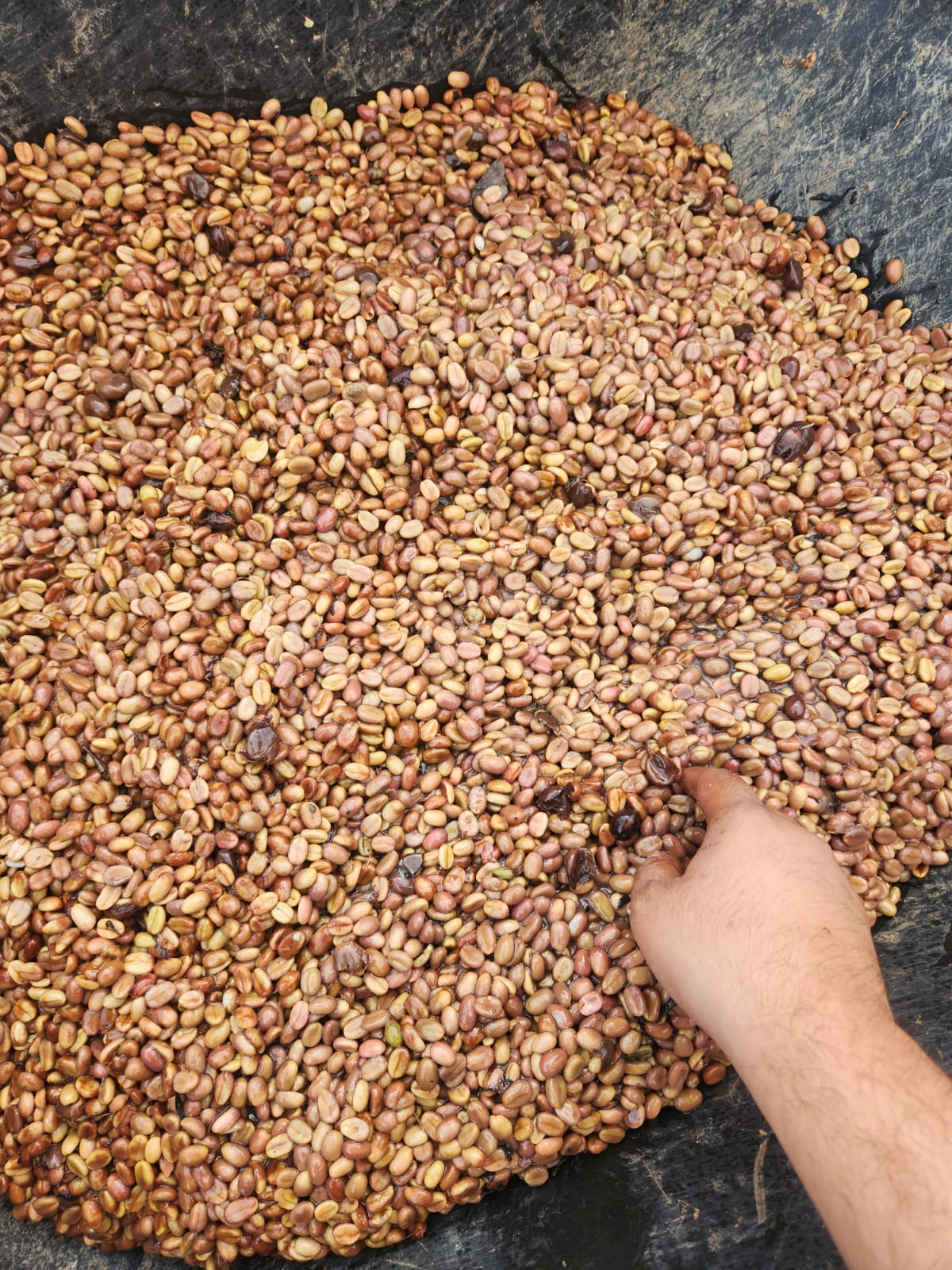
After harvest, the cherries are sorted to remove any underripe or damaged ones. They are then pulped at the wet mill, where the skin is removed while a portion of the mucilage is intentionally left on the beans. Unlike the fully washed process, this method involves little to no fermentation.
A light washing follows, preserving some mucilage that contributes to the coffee’s distinctive sensory profile. The beans are then dried naturally in the sun, spread evenly across patios or raised beds for five to eight days depending on weather conditions, and turned regularly to ensure consistent drying. Once the desired moisture content is reached, the coffee is transported to a storage facility where it remains until dry milling and export preparation. This process produces a cup that balances clarity with enhanced texture and sweetness.